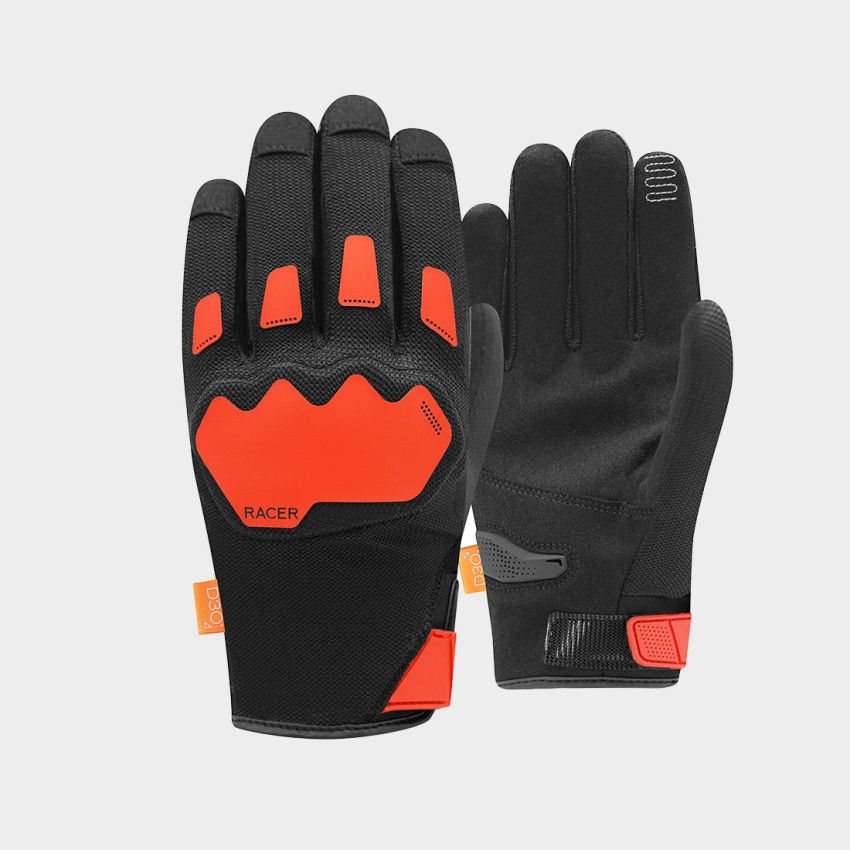
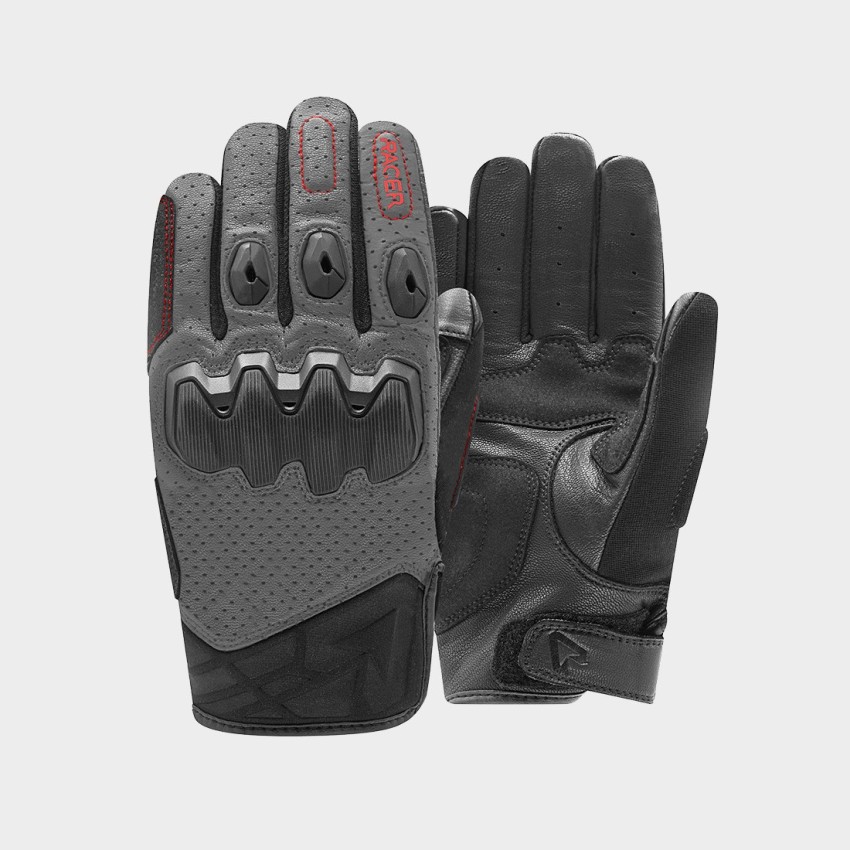
You’ve just bought a new pair of gloves, or you’re trying to decide between two models. One proudly displays a CE logo on its packaging; the other seems just as sturdy at first glance, but something doesn’t quite add up. How can you be truly sure that your gloves will protect you effectively? And first of all, what does this certification everyone’s talking about actually mean?
This guide gives you the keys to understanding the motorcycle glove certification system from A to Z: how gloves are tested, what the labels really mean, and how to check in 30 seconds whether your pair meets the standards. Because an uncertified glove offers protection whose actual effectiveness is unknown—and on the road, that can make a big difference.
EN 13594: The Only Standard That Matters
EN 13594
In Europe, there is a single authoritative standard for evaluating the protective performance of motorcycle gloves: EN 13594:2015, officially titled “Protective gloves for motorcyclists.” It replaced the previous version from 2002 and applies to all two-wheeled vehicle users, not just professionals.
Since November 20, 2016, wearing gloves certified to this standard has been mandatory for all drivers and passengers of motorized two-wheeled vehicles—including mopeds and ATVs. This is therefore neither a recommendation nor a voluntary standard: it is a legal requirement, enshrined in the French Highway Code by Decree No. 2016-1232 of September 19, 2016.
If stopped by authorities, riding without CE-certified gloves is punishable by a third-class fine (€68, reduced to €45 if paid within 15 days) and the loss of one point on your driver’s license. Beyond the penalty, the stakes are much higher: the hands are the first point of contact with the ground during a fall, and protecting them directly affects the severity of injuries.
What the certification actually tests
Before a manufacturer is authorized to affix the CE mark to its gloves, the gloves must undergo a series of rigorous tests conducted by an independent, accredited laboratory. It is important not to confuse this certification with a simple manufacturer’s declaration: independent organizations, such as CRITT or other accredited laboratories, are authorized to verify product compliance.
Here are the main tests that each pair of gloves must pass before receiving certification.
The burst test
The glove is subjected to increasing pressure from the inside until a seam comes loose, a component fails, or the material tears. For Level 1, the minimum required strength is 40 newtons. This test evaluates the structural integrity of the glove as a whole, not just that of its main fabric.
The tear test
It simulates the stress placed on the glove during a fall in which the hand strikes the ground and decelerates abruptly. The hand goes from full speed to zero in a fraction of a second, which can cause the glove to stretch or tear. This test evaluates the resistance of the materials and seams to this sudden deceleration.
The Cut and Puncture Resistance Test
Cut resistance is evaluated using two methods, depending on the material: a slitting cut test and an ISO 13997 test, the latter of which is mandatory if the material dulls the blade during the first test. Puncture resistance, on the other hand, is measured using a puncture force test. These tests are particularly important for gloves exposed to debris or rough road surfaces.

Structural Requirements
In addition to durability tests, the standard requires specific construction features. A wrist strap is required, as is a durable palm with reinforcements in strategic areas. For Level 1, the glove must extend at least 1.5 cm below the base of the thumb. For Level 2, this distance increases to 5 cm, and protective knuckle guards become mandatory.
Understanding the Levels: 1, 1KP, 2KP
Once the gloves have passed the tests, they are assigned a protection level that is clearly indicated on their label. Understanding these levels means understanding the specific purpose for which each glove was designed.

The level of protection is indicated in a box to the left of the motorcyclist icon. A second box, on the right, may contain the letters “KP”—for Knuckle Protector—when a shell protects the top of the hand at the metacarpals. This box remains empty if the glove does not have this protection.
Level 1
Level 1 provides protection suitable for everyday urban riding. The glove can withstand 4 seconds of abrasion, but joint protectors are not required. This level is sufficient for city riding but limited for expressways or long distances.
Level 1KP
Level 1KP adds protection for the metacarpal joints to Level 1. It’s a good compromise for mixed-use scenarios—city and highway riding—where you want to combine maneuverability with enhanced protection for the areas most vulnerable in a fall.
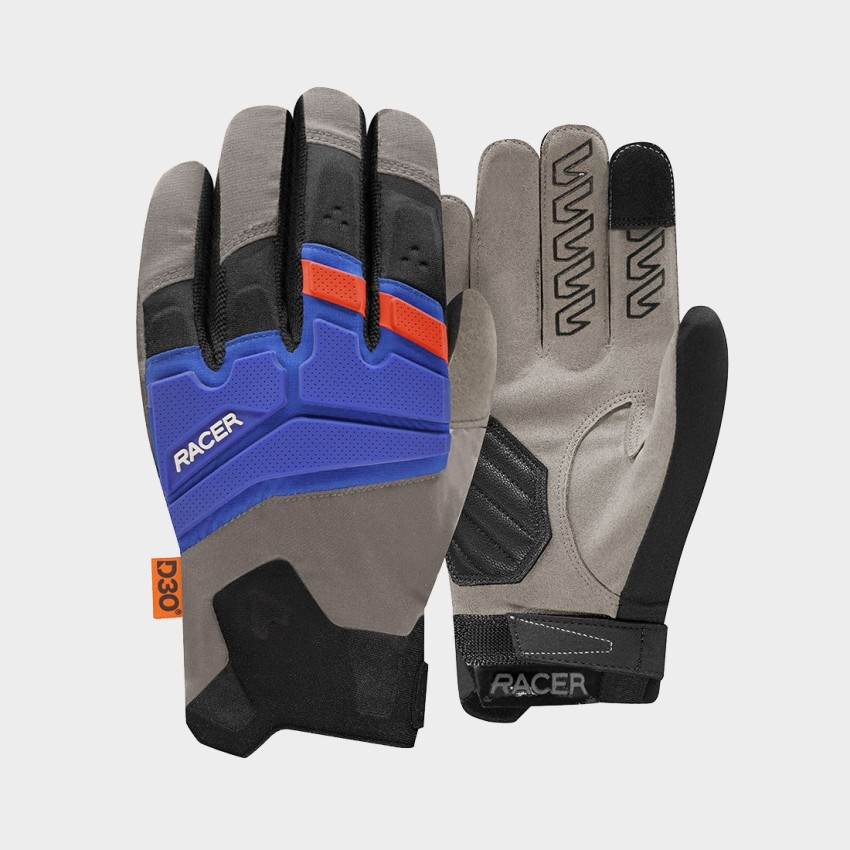
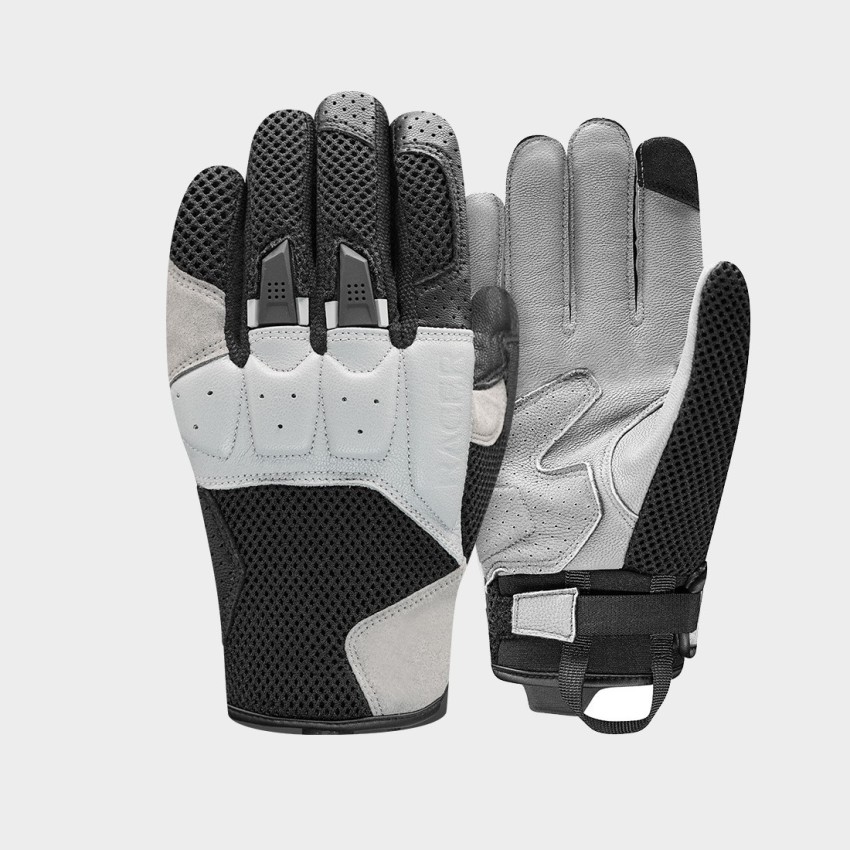
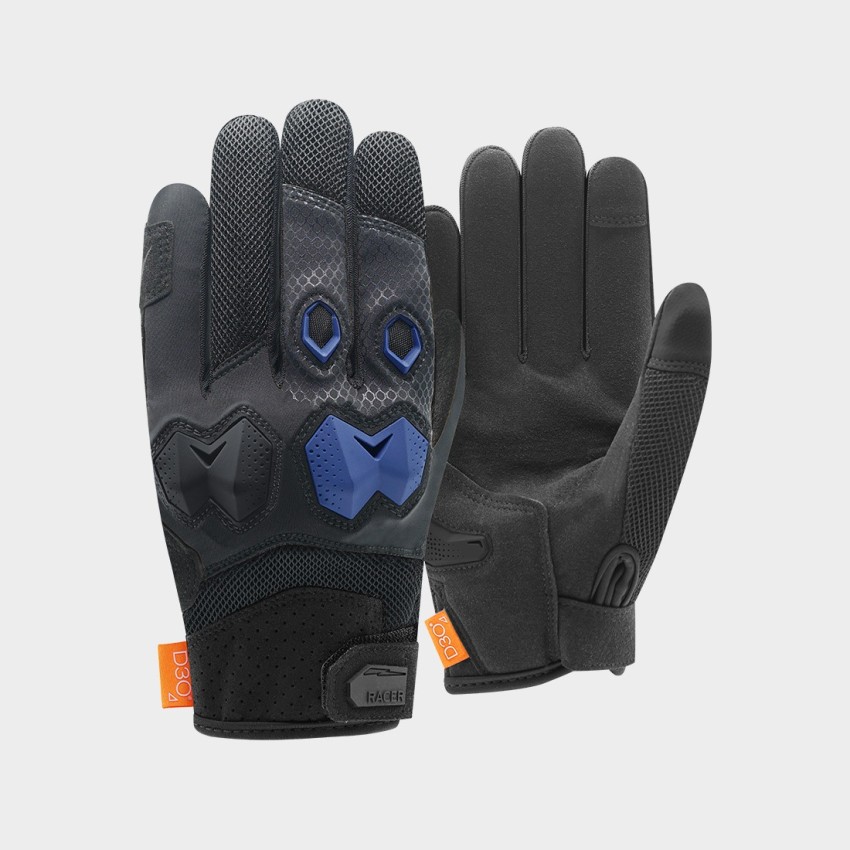
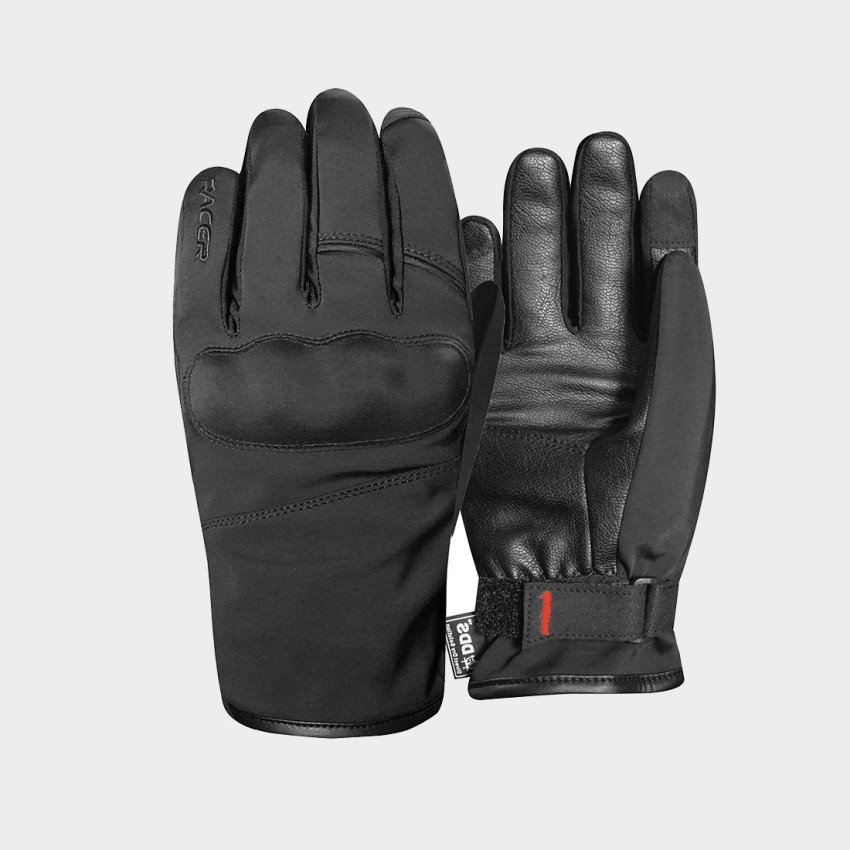
At Racer, most of our lineup is certified to Level 1KP.
Level 2KP
Level 2KP represents the highest certified level of protection. It is recommended for intensive road use outside urban areas or for professional use. Double the abrasion resistance, mandatory joint protectors, and a longer cuff: this is the level we recommend for all rides outside strictly urban settings.
How to Check Your Gloves' Certification in 30 Seconds
You don't have to be an expert to check whether a pair of gloves meets safety standards. Here's a step-by-step guide.
STEP 1
Look for the label inside the glove
The certification label is located at the base of the glove, on the inside. It features the CE logo and the motorcyclist pictogram. If you can’t find either of these, the glove is not EN 13594-certified—regardless of its outward appearance.
STEP 2
Check the standard reference
The label must explicitly state EN 13594:2015. A simple “CE” marking without reference to this specific standard is not sufficient to certify motorcycle protection. This CE marking alone indicates that the glove meets the general requirements of the PPE Directive, but not necessarily the EN 13594 standard, which is required during roadside inspections.
STEP 3
Identify the protection level
Look for the number in the left box of the motorcycle rider pictogram (1 or 2) and check for the letters “KP” in the right box. These two pieces of information immediately tell you the level of protection and whether or not the helmet has joint protectors.
STEP 4
Never remove the label
In the event of a traffic stop, this label allows law enforcement to verify that your gloves comply with regulations. Without it, you cannot prove that your pair is certified, even if it actually is.
STEP 5
Check Before Purchasing
If you’re buying online and the product photos don’t show the label, look in the product specifications for the explicit mention “EN 13594:2015” along with the protection level. Any glove sold after April 2018 with CE certification must come with an instruction booklet indicating the protection category and the applicable standard. The absence of this booklet or a clear technical data sheet should raise a red flag.
What Certification Doesn't Tell You—and What Makes the Difference
The EN 13594 standard is a minimum requirement, not a maximum limit. It guarantees that the glove will not put you in danger, but it says nothing about the quality of the materials used beyond the minimum requirement, about long-term durability, about thermal comfort, or about the additional technologies incorporated by some manufacturers.
This is precisely where the difference lies between a “basic” certified glove and an expert-level glove. Technologies such as D3O, which absorbs up to 90% of impact energy, or ERGOFLEX shells, which combine protection with freedom of movement, go far beyond what the standard requires. Similarly, a POLYMAX or DDS membrane has no impact on the certification level—but it determines your comfort over hundreds of kilometers in all weather conditions.
A new European standard, prEN 13594:2015+A1:2022, is currently being finalized. In particular, it introduces more rigorous impact tests on the joints and better accounts for the rotational stresses on the hand during a fall. Insurance Code The standard is evolving—and at Racer, we anticipate these stricter requirements rather than simply following them.
A certified glove guarantees the legal minimum. A certified Racer glove offers that guaranteed minimum, plus everything our engineers have added to ensure you’re truly protected.
Discover our entire line of certified motorcycle gloves at racer1927.com

Français
English
Italiano
Español