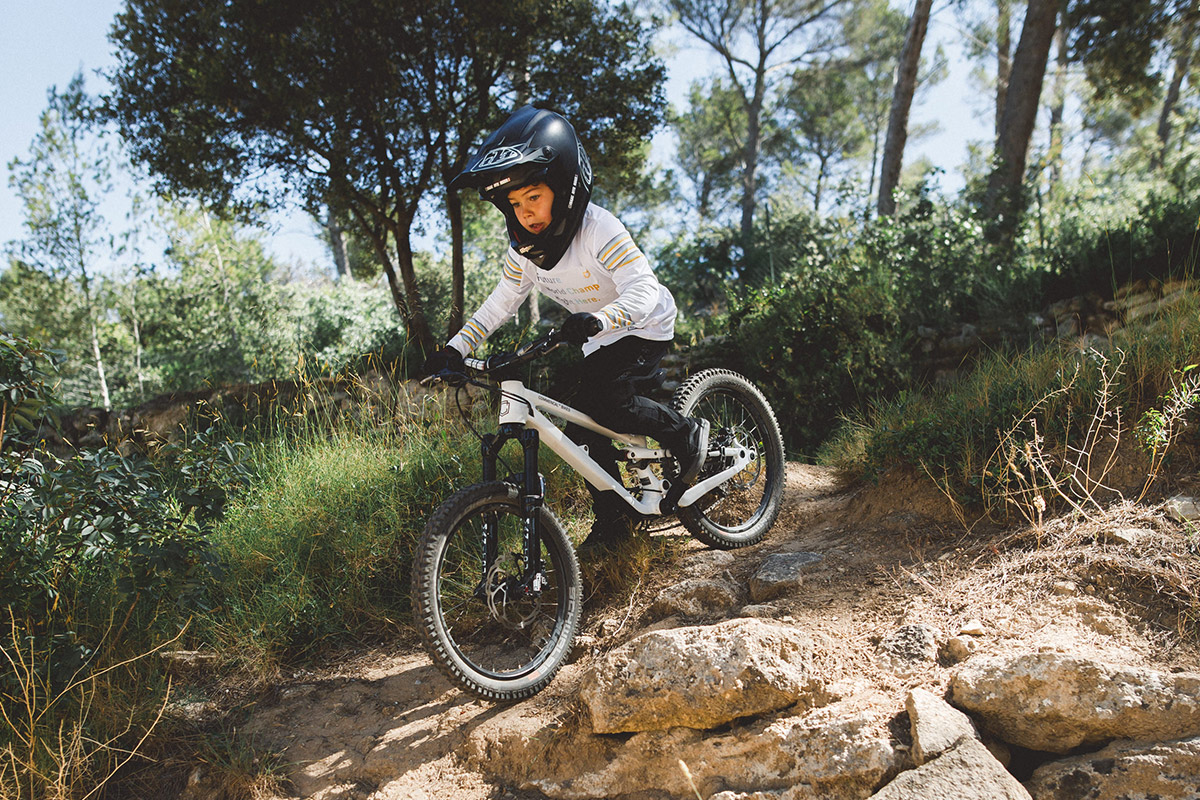
Soccer, judo, tennis, dance... every year when school starts, it’s the same trio (or quartet) that takes center stage on the sports club registration table. So why not consider mountain biking and BMX this year?

Far from the “niche sport” label sometimes attached to them, these are well-rounded outdoor disciplines that engage the whole body and, session after session, build true athletes. Core strength, balance, muscle tone, cardio, coordination: sports science confirms what many parents of young riders have already observed firsthand. We’ll explain why—and how to equip your child so they can progress safely.

Mountain Biking and BMX: Well-Rounded Sports—and Symmetrical Ones, Too!

Mountain biking and BMX have something in common with running and swimming: they are bilateral activities that work both sides of the body in a balanced way, unlike sports such as tennis or golf, which are asymmetrical. They go even further by adding a constant technical element to the cardiovascular workout: reading the terrain, anticipating the route, modulating braking, absorbing bumps with your legs, and maintaining balance on an uneven single track…

Result: A child who rides a mountain bike or BMX regularly isn't just riding a bike. They build strength in their legs and core, sharpen their reflexes, learn to manage risk, and develop gross motor skills that are hard to find in other sports.

What Science Says About the Benefits of Cycling for Children

A true fitness tool, recognized by health authorities

The World Health Organization recommends that children and adolescents engage in at least 60 minutes of moderate- to vigorous-intensity physical activity daily, combined with muscle- and bone-strengthening activities several times a week. Cycling in a competitive setting (mountain biking, BMX) checks both of these boxes: it is a sustained cardiovascular activity that, on technical terrain with climbs, jumps, and uneven surfaces, also places significant demands on the muscles of the lower limbs and core.

A review of the scientific literature on children and adolescents confirms that regular participation in sports improves muscle strength, cardiorespiratory fitness, and body composition, leading to a reduction in cardiovascular risk factors starting at a very young age.

The skeleton of a young athlete who is building his physique through cycling

Adolescence, particularly puberty, is a key period for building bone mass. Researchers also point out that it is primarily activities that subject the skeleton to impacts and stress that optimize bone density—which is precisely what sets mountain biking and BMX, with their jumps, bumps, and rough terrain, apart from simply riding on pavement.

Balance, coordination, reflexes: the brain develops just as much as the body

Riding an all-terrain bike requires children to simultaneously manage their dynamic balance, coordinate their pedaling, and anticipate obstacles. It’s a demanding neuromotor learning process, far more complex than it appears: the brain learns to process visual, proprioceptive, and vestibular information in real time to keep the child stable while moving. The more technical and varied the riding (tree roots, turns, small jumps), the richer this learning experience becomes.

Self-confidence and independence

Beyond the physical benefits, mountain biking and BMX teach children to assess risk, adjust their decision-making, and gradually push their limits—all within a supervised and safe environment. It’s also an activity that’s often enjoyed outdoors and in groups (clubs, family outings), away from screens.

Mountain Bike or BMX: Which One Should You Choose for the Start of the School Year?

Both disciplines share the same core benefits, with a few differences:

Mountain Biking

(cross-country, enduro, bike park)

It primarily develops endurance, the ability to read the terrain, and the ability to pace yourself over long distances.

BMX

Emphasizes explosiveness, technical precision, and the ability to handle repeated impacts: a very well-rounded sport that builds power and reflexes.

In both cases, your child will learn faster the more confident they feel on their bike, and that confidence comes from having the right protective gear.

Safety: A Non-Negotiable Prerequisite

Falls, roots, small jumps in the bike park, or BMX tricks: off-road riding exposes children to impacts. While this activity helps develop motor skills, it also requires proper gear designed for the body type and movements of young riders.

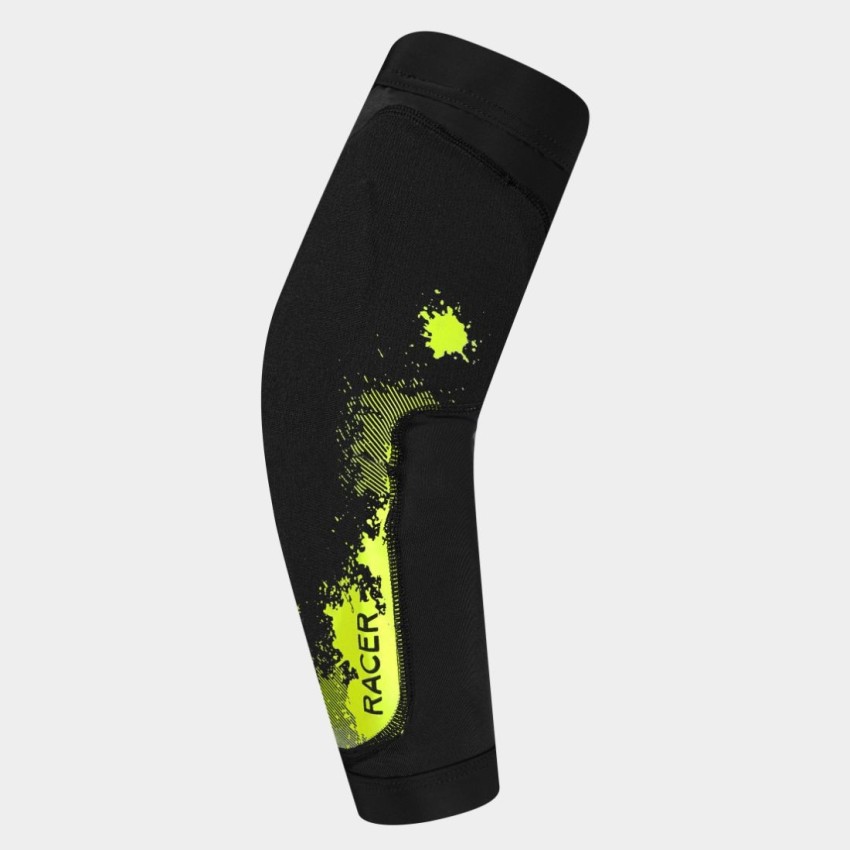
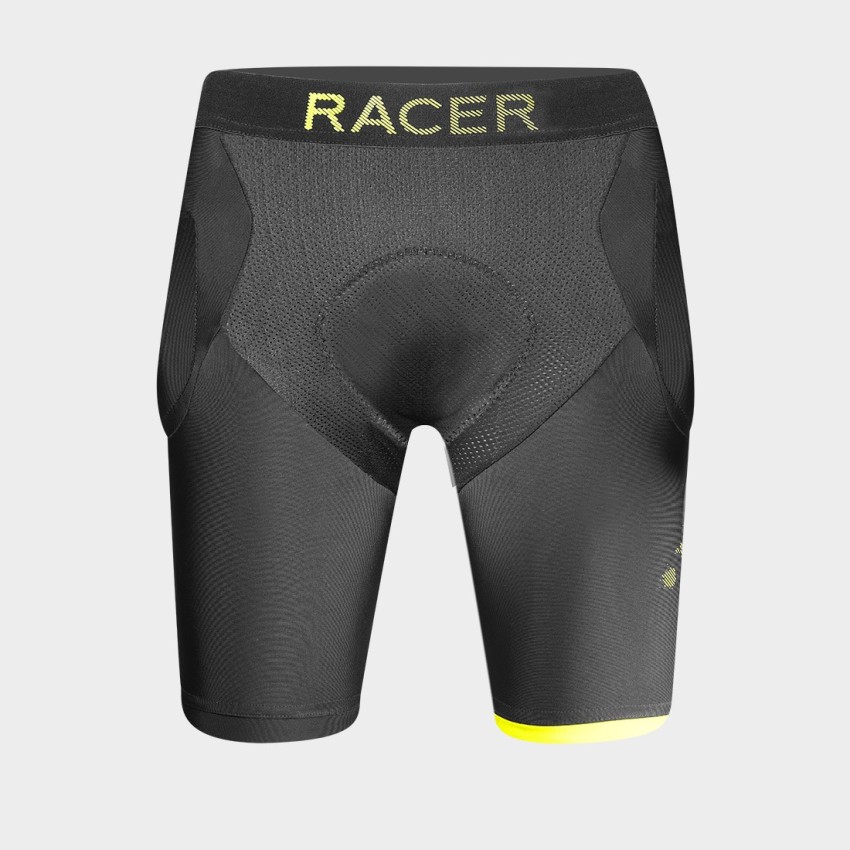
At Racer 1927, our line of children’s MTB and BMX protective gear is based on German SAS-TEC™ technology, a memory foam that remains flexible during everyday use and hardens upon impact to absorb shock. This technology has been used for years in our adult lines and has been adapted to fit children’s body types.

The complete kit typically includes three pieces:

- A protective vest or chest protector (chest, back, shoulders, elbows)

- Shorts with built-in protection for the hips and thighs

- Specialized knee pads with non-slip straps to keep them securely in place

And don’t forget to top it all off with a full-face helmet, of course!

Avec ce type d'équipement, l'enfant est bien protégé et peut se concentrer sur sa progression plutôt que sur la peur de tomber, et vous, parents, pouvez le laisser explorer ses limites sereinement.

How to Choose the Right Mountain Bike or BMX Club for the Start of the School Year

Here are a few guidelines to help you with your search:

1. Instruction: certified instructors (BPJEPS or FFC/UFOLEP equivalent), groups organized by skill level and age rather than just by age.

2. The training area: a certified BMX track or a secure mountain bike area (such as a “pump track” or training track) allows for progress without unnecessary danger.

3. Find out what equipment is required: most clubs require a full-face helmet or an approved open-face helmet, and strongly recommend (or even require) back protectors, knee pads, and elbow pads starting with the first technical sessions.

4. Introductory session available before enrolling your child for the year: most clubs offer one or more free trial sessions in September.

In summary

Mountain biking and BMX aren’t just “fallback” alternatives to soccer or judo: they’re well-rounded sports that simultaneously build your child’s endurance, strength, balance, technique, and self-confidence—all while enjoying the great outdoors. All that’s needed now is the right protective gear to ensure the new sports season gets off to a great start.

Sources

- World Health Organization — *WHO Guidelines on Physical Activity and Sedentary Behaviour* (https://www.ncbi.nlm.nih.gov/books/NBK566046/)

- Physical activity in children and adolescents, PubMed (https://pubmed.ncbi.nlm.nih.gov/23174545/)

- Exercise and children's bone health, PubMed (https://pubmed.ncbi.nlm.nih.gov/19113034/) (https://www.ncbi.nlm.nih.gov/pmc/articles/PMC2829506/)

- Physical Activity and the Optimization of Bone Mineral Density in Adolescents: A Systematic Review, Physiologia 2025 (https://doi.org/10.3390/physiologia5040051)

Loading...